

The Driving Simulation Association organizes in the framework of the DSC 2026 Conference, the “Smart Vehicle for Sustainable Mobility” contest, in cooperation with AVSimulation, Hexagon, IPG-Automotive and MathWorks.
The contest is open to students from Master or PhD students, individually or in small groups, interested in sustainable cities, simulation and smart vehicles. Inscriptions will open on May 15th: Contest Registration
The proposed solutions must be submitted by July 15th. The Selection Committee will evaluate the propositions and select the 3 winners, with a 1,000€ price for the first and 500€ for the second winner, all 3 receiving a winner award.
Winners will present their solutions at the DSC Europe 2026 VR conference on September 16th, 2026 at the Congress Center of Antibes.
Students should first register for the challenge on ConfTool
Tasks
In this contest, you will have to create the virtual environment of the selected area of interest as well as realistic traffic scenario, including passenger vehicles, public transport systems such as buses and trams, and active mobility options like bicycles and pedestrian movement, respecting OpenDrive and OpenScenario allowing interoperability with external autonomous vehicle models.
First, define a scenario:
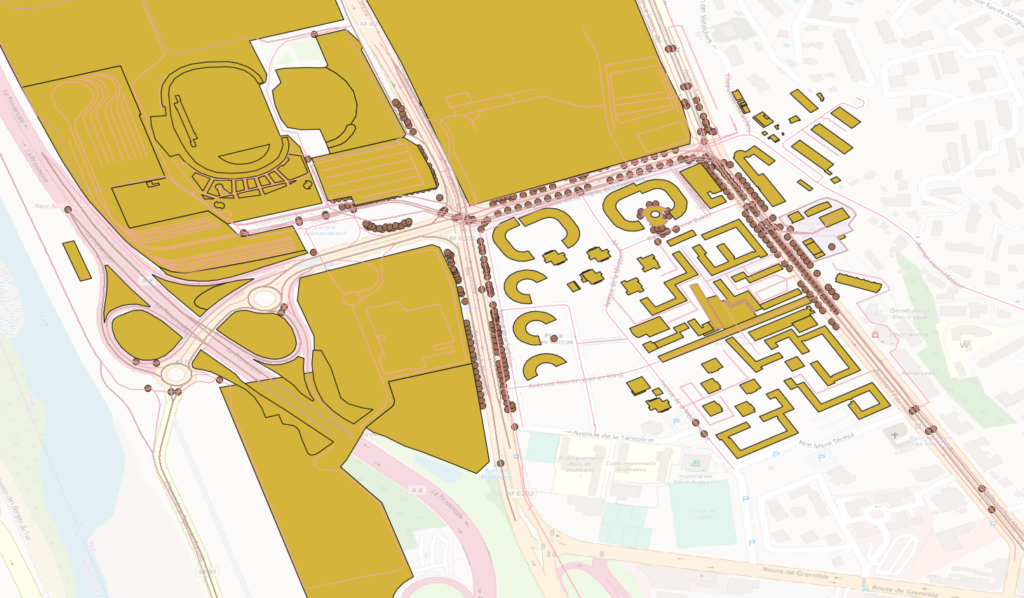
- Choose an area of interest: Choose an interesting area in Nice (for example, see the selected OpenStreetMap area) or any other city of your choice (such as Rio, Bologna, Lille, etc.).
- Data management: Please note that while the data for Nice is readily available, participants choosing another city will need to source and manage their own geographic and traffic data.
Goal: The main objective remains to identify a location where optimizing the traffic lights network has a significant impact on traffic flow. You may extend or adapt the area as needed.
Evaluation
We expect you to be creative. So, candidates are not evaluated on their programming skills alone.
The Selection Committee will evaluate your solution considering its innovativeness, its levels of realism of the generated environment and road traffic, as well as real time performance.
To submit your solution, you must provide a short video and a paper which format is close to scientific papers. You can find the guidelines and the template on the submission page.